Revionics
A no-code, node-based workflow builder for enterprise retail pricing teams. Designed in late 2023 (pre-agentic AI)
Enterprise,B2B, SaaS
Workflow Automation
Role
Senior Product Designer
Timeline
Q3 2022 – Q4 2023
team
4 senior designers, UX research team, PM, Engineering leads
platform
Web
Every event needed a human in the loop. The system could not act on its own.
Revionics is an enterprise pricing platform used by retailers like Ahold Delhaize, Leroy Merlin and Family Dollar to optimise pricing, promotions and markdowns at scale. A typical customer runs over 100,000 SKUs across thousands of stores, with hundreds of thousands of ML models generating price recommendations in the background.
Our team was not brought in for a UI refresh. The mandate was to rethink the platform and find new product directions in a market that was starting to commoditise. I led the Automation Engine, a no-code visual workflow builder, from the first concept conversation through research to the shipped design.
It is Friday. Gloria opens SAP, exports a raw table, cleans it in Excel, cross-references last week, writes a summary, attaches the file and sends it to six people. Two reply asking for a different cut of the same data. Ninety minutes. Every week. It is not her job. It is the overhead sitting between her and her job. The same pattern repeated across markdown alerts, supply-chain notifications and approvals. Every event needed a human, not because decisions were complex, but because the platform had no way to act on its own.
~90 minutes, every week, on one recurring report. Multiply that across four roles and dozens of recurring tasks.
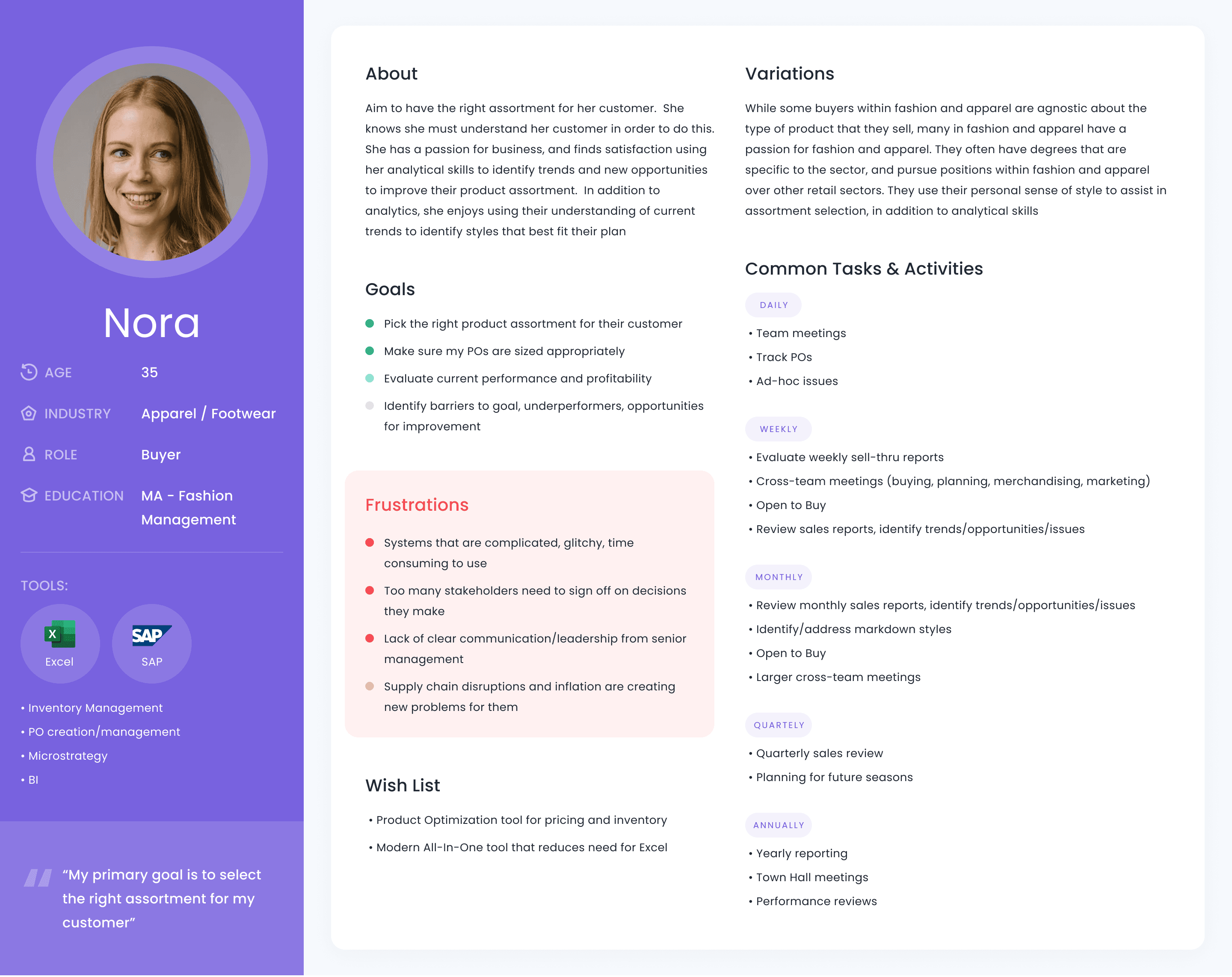
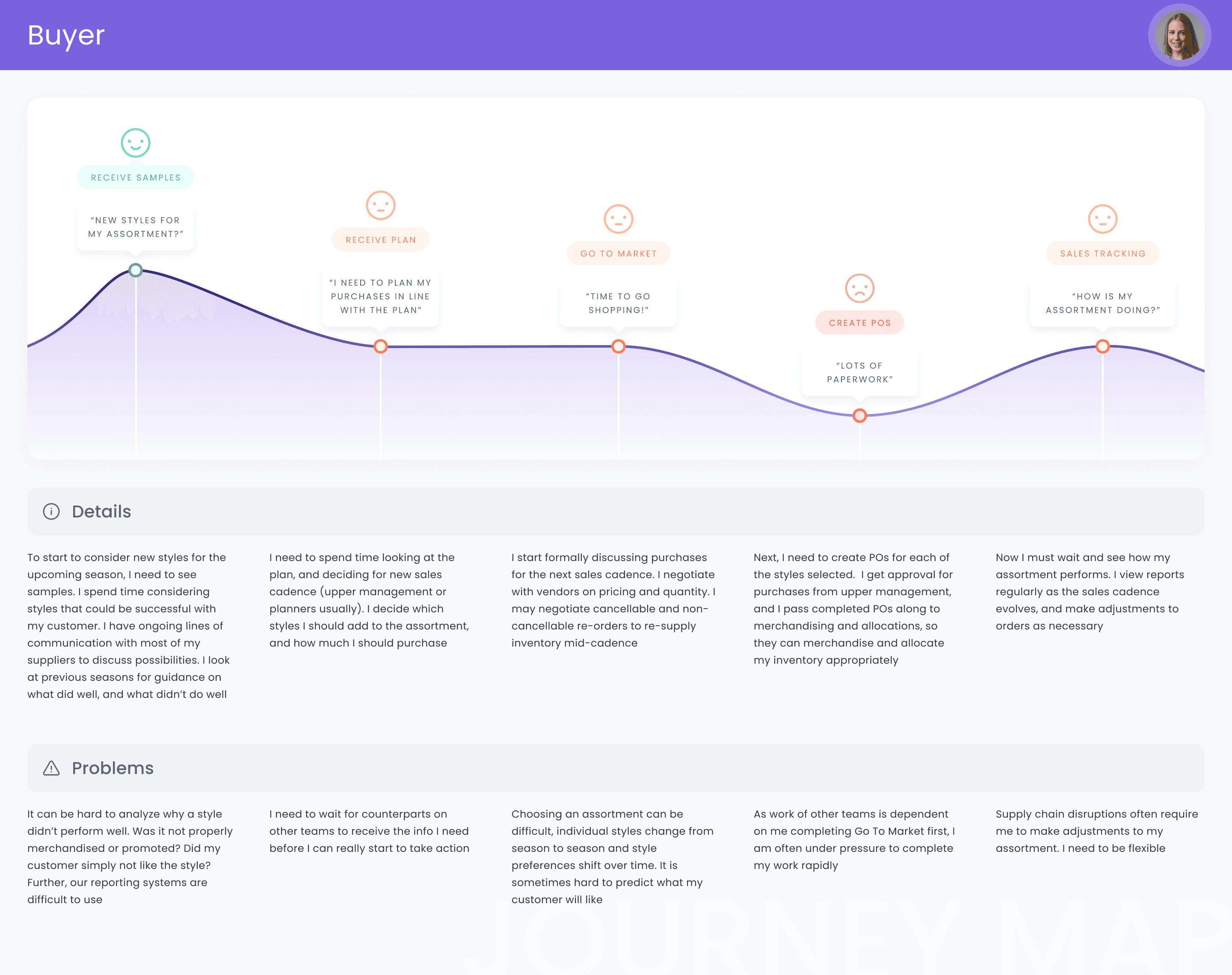
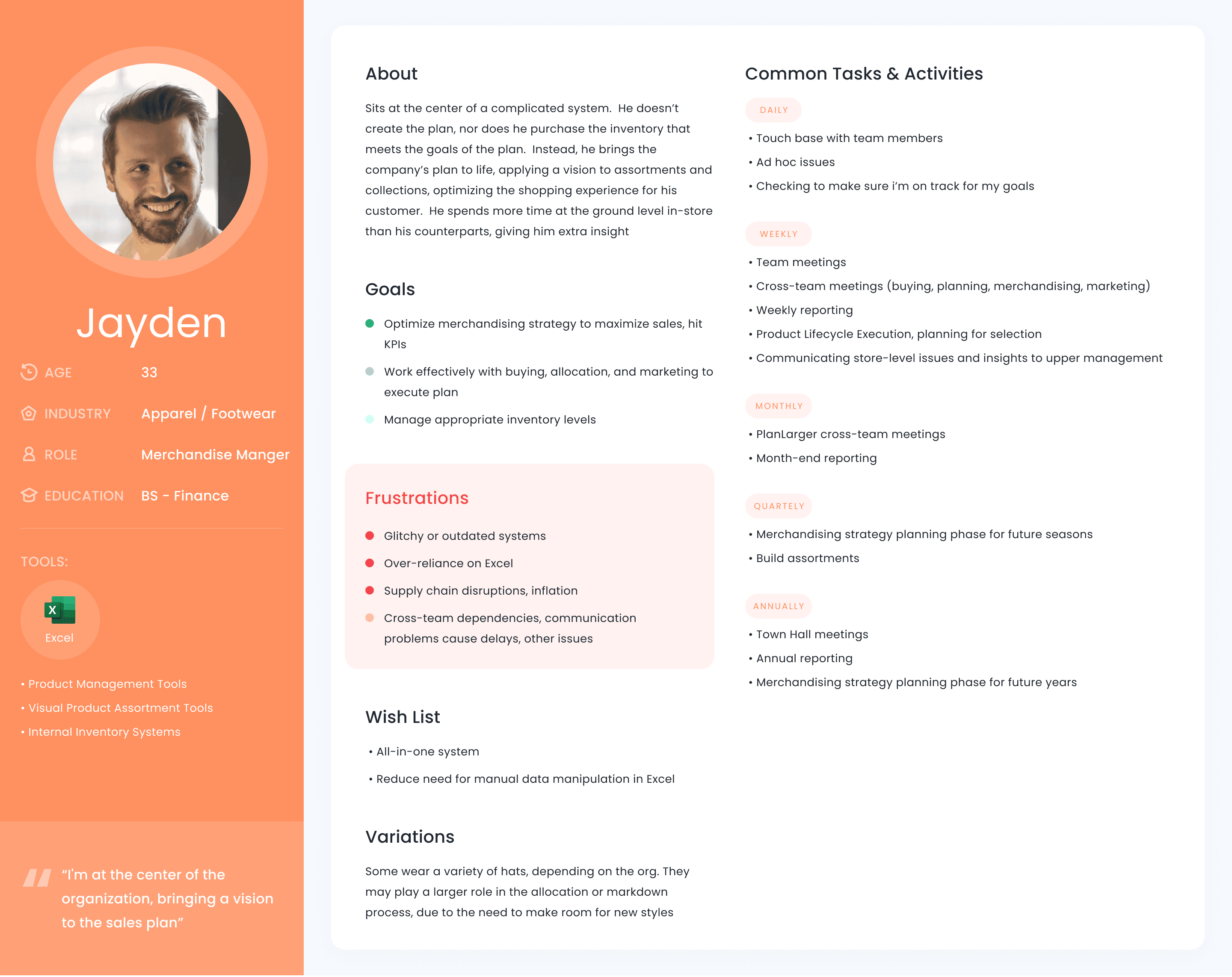
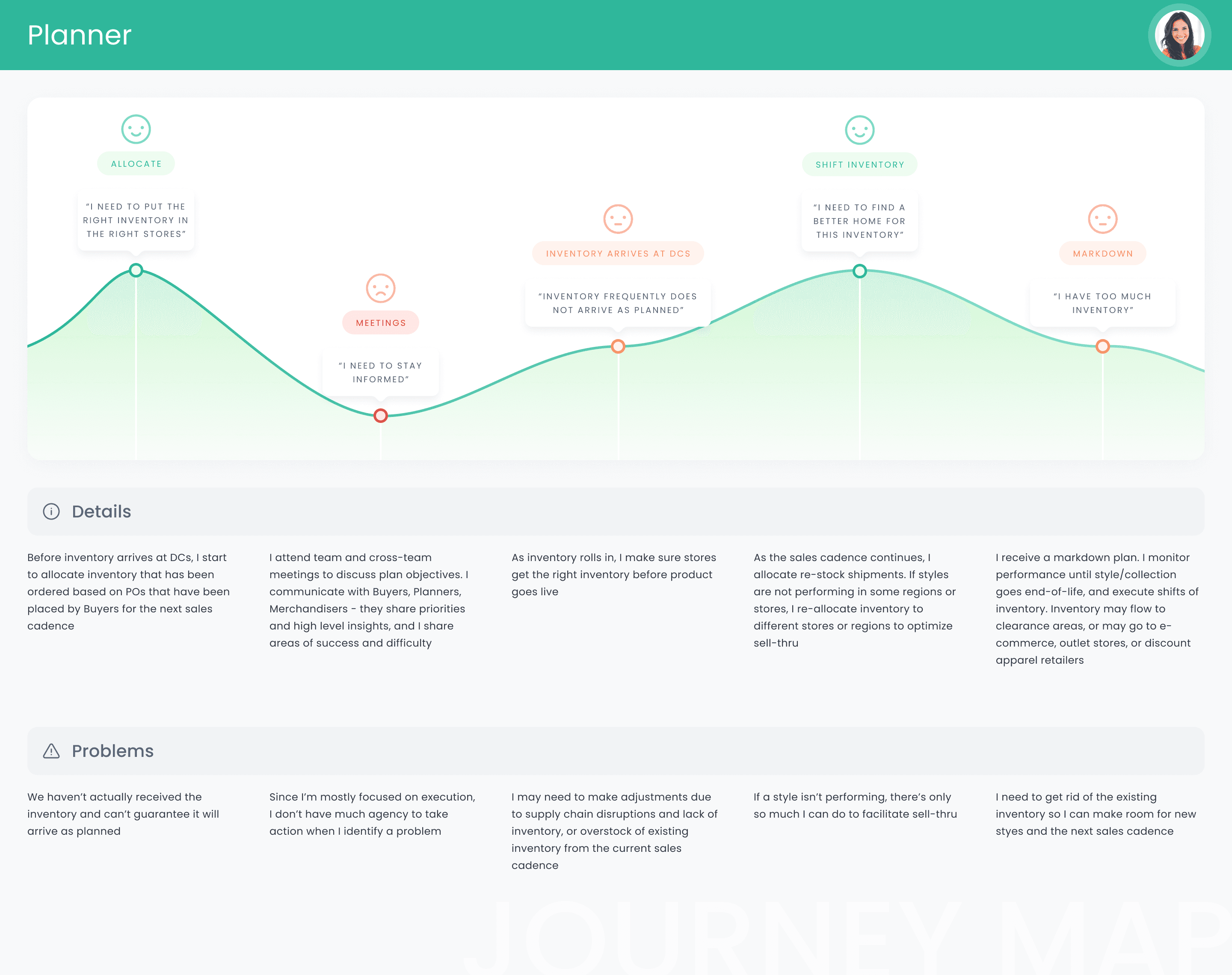
Four roles. One shared frustration: Excel doing the platform's job.
We ran this with the UX research team. Direct interviews, contextual observation, persona validation. The same pain showed up regardless of who we spoke to.
Emilia, 28, Allocator. "Last-minute ad-hoc requests, outdated systems, delays in reporting. I just want a tool that does it without me exporting to Excel every time."
Gloria, 39, Planner. "Inefficient reporting, unreliable systems, too much manual data work. I am trying to plan inventory levels properly, but the tools work against me."
Nora, 35, Buyer. "Too many people need to sign off on my decisions. By the time approvals land, the market has already moved on."
Jayden, 33, Merchandise Manager. "Cross-team dependencies cause delays. I sit at the centre of the org, but I am always waiting on someone else."
What all four shared: heavy Excel dependence for work the platform should handle, manual repetitive flows with no scheduling, approval bottlenecks, and no way to react to an event without a human at every step. An internal audit of recurring reporting counted 7 to 9 manual steps in a typical weekly flow.
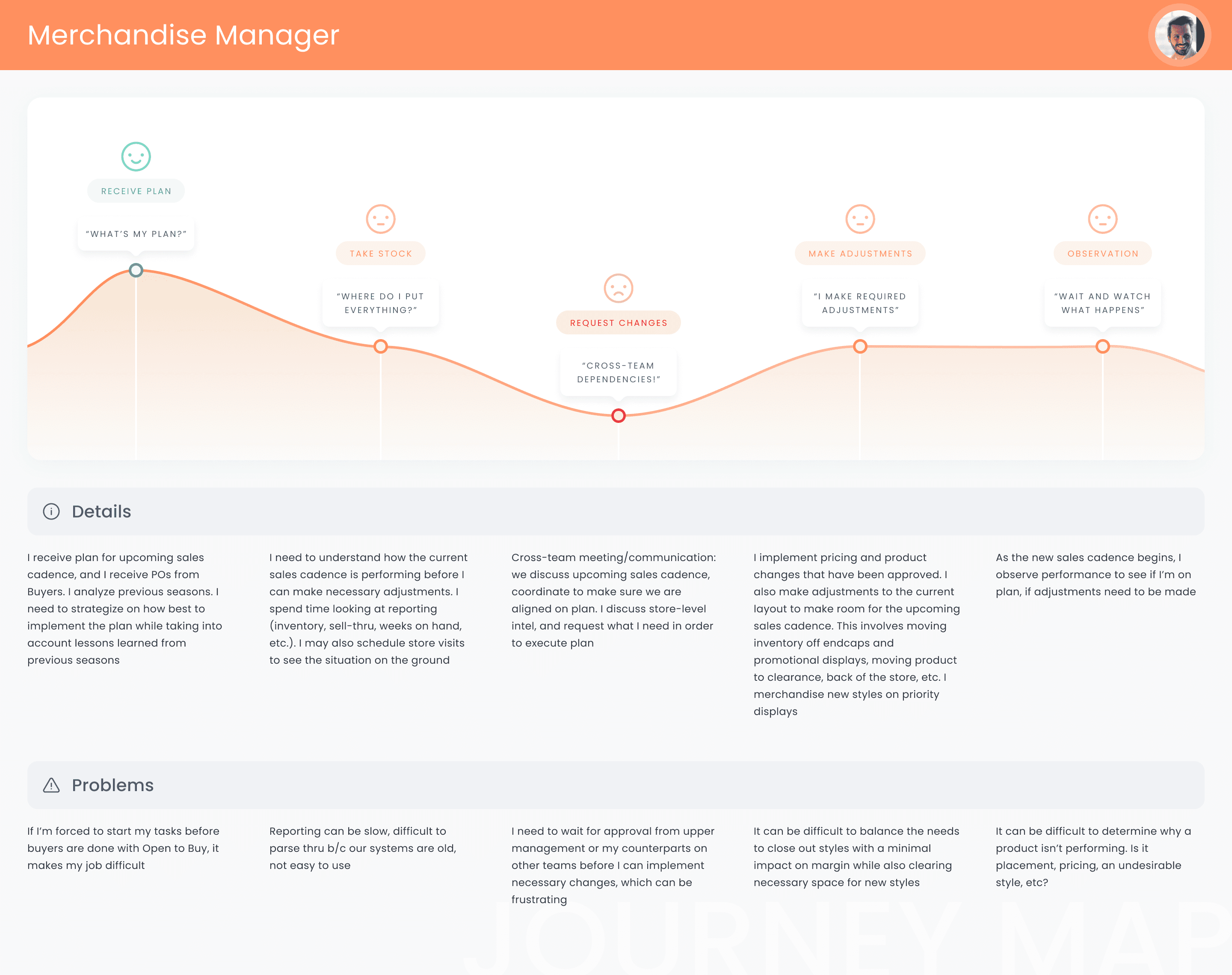
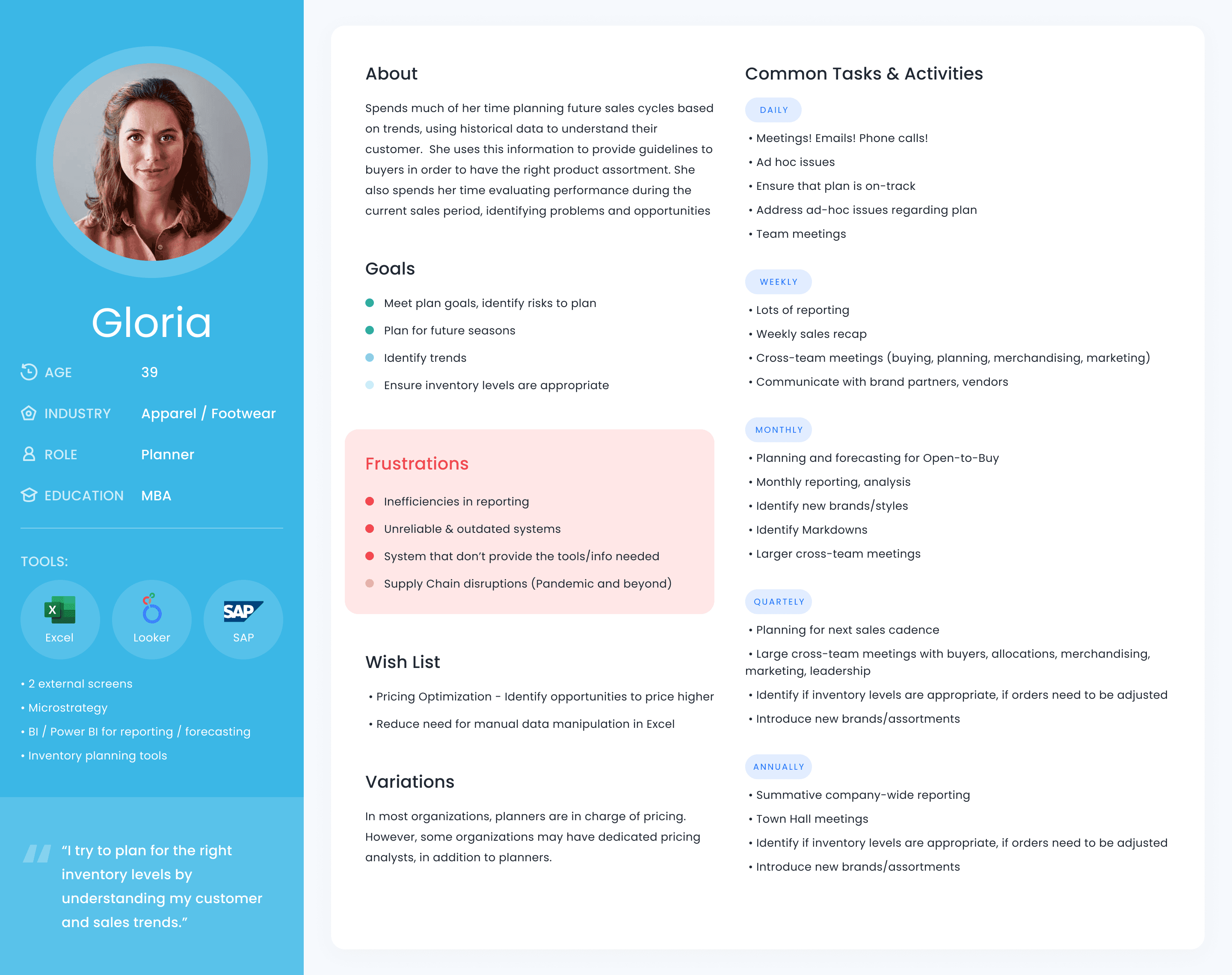
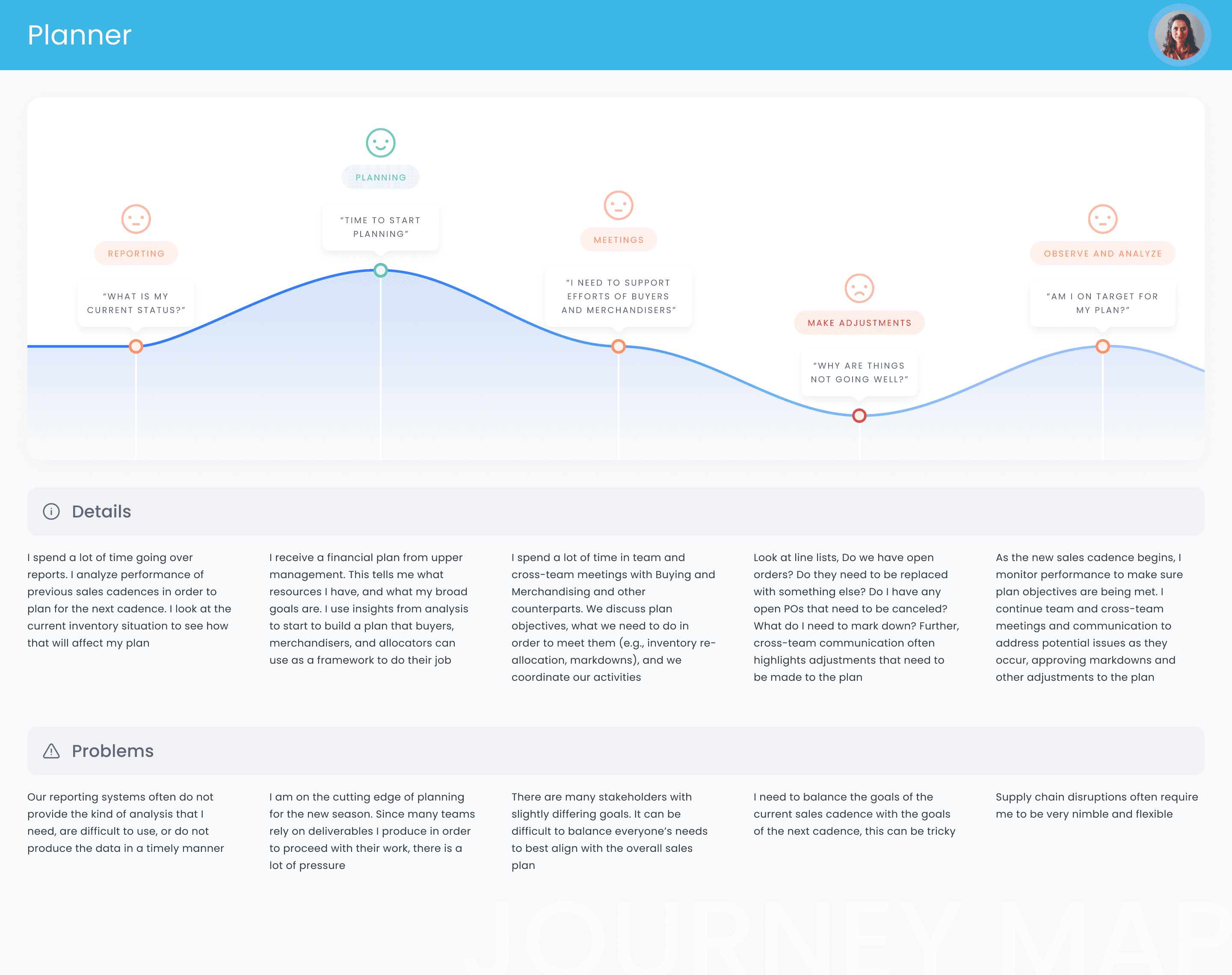
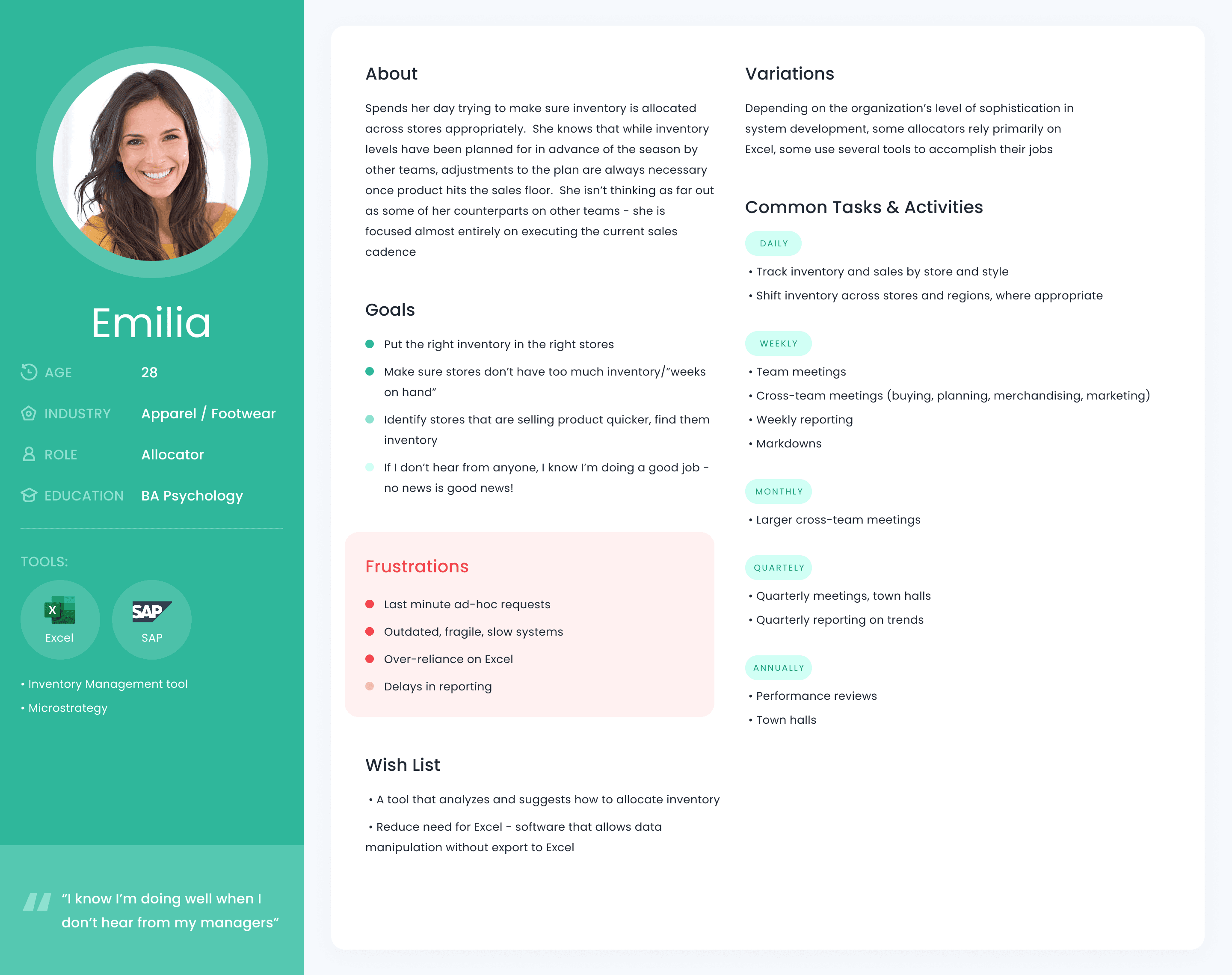
People did not want more automation. They wanted control.
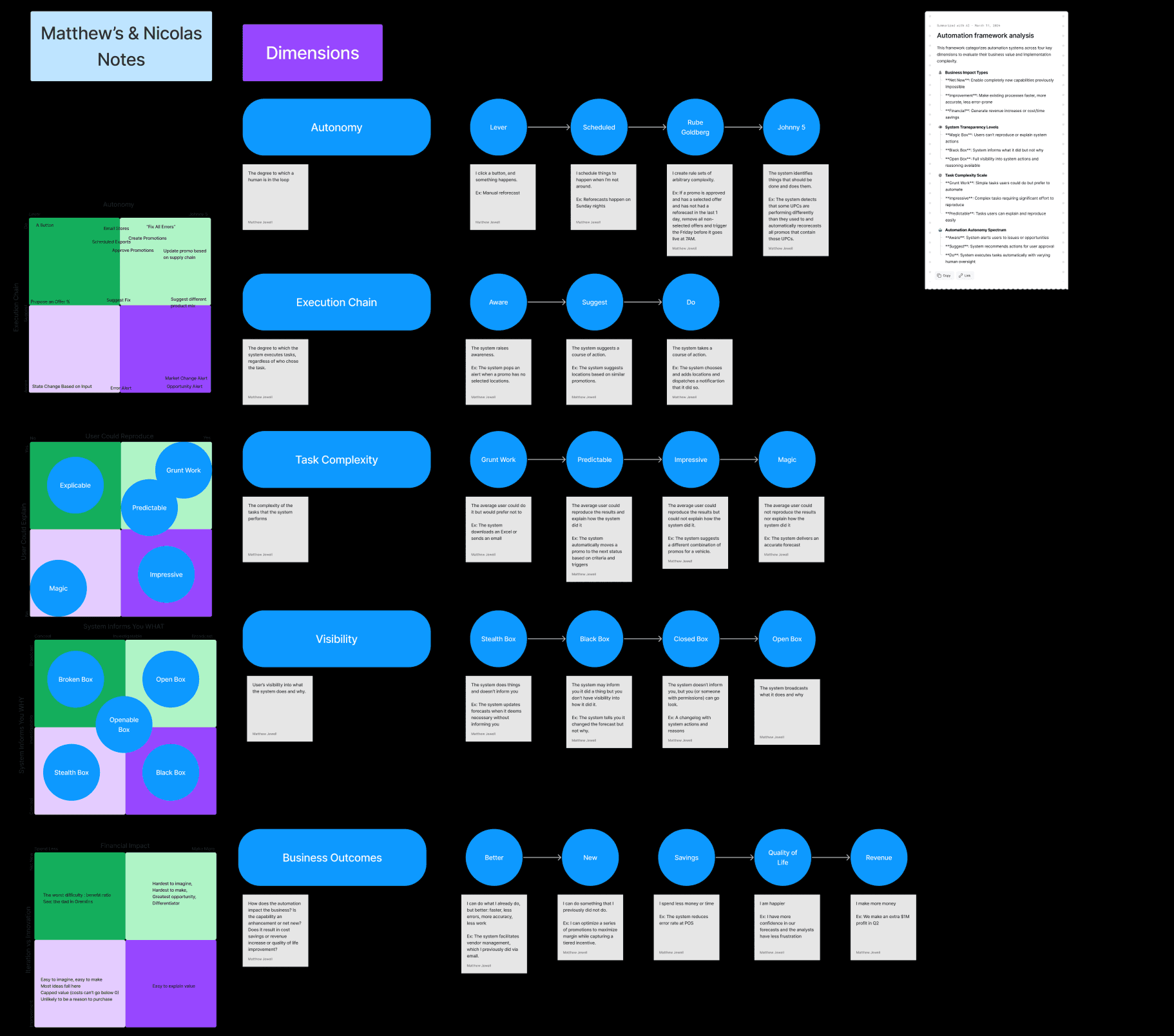
Before drawing anything, I ran a workshop to agree on what "automation" actually meant here. The word means different things to a designer, a PM and a retail planner. Define it wrong and you build the wrong thing.
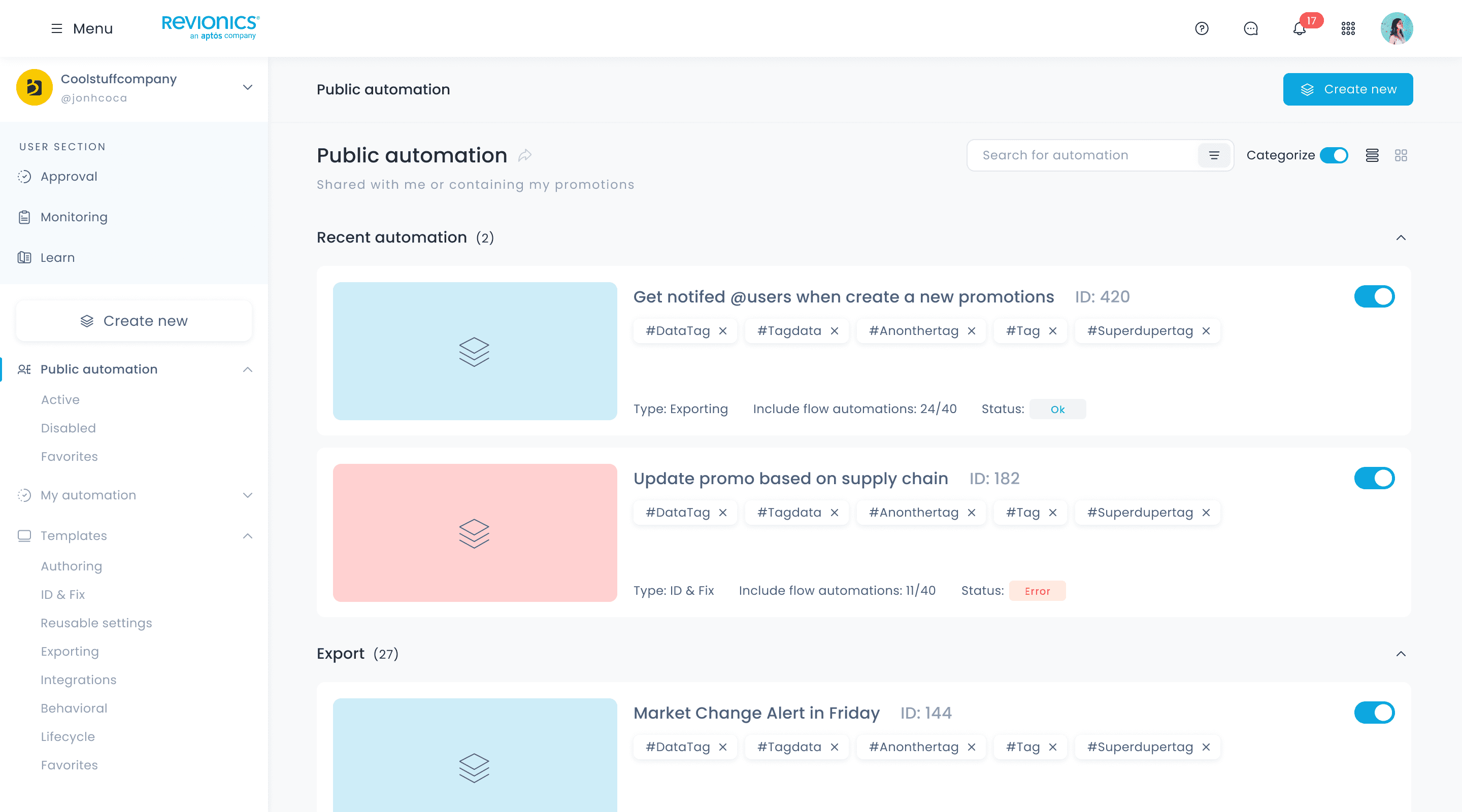
We mapped automation across five dimensions: the autonomy spectrum, the execution chain (Aware, Suggest, Do), task complexity, visibility (black box to open box), and business outcome. We evaluated three directions and chose a visual, composable workflow builder. Research kept pointing the same way. People did not just want automation. They wanted control. They had been burned by black-box systems before, and they needed to see, build and own their own workflows.
For benchmarking I looked at macOS Shortcuts, Zapier, n8n and node-based video editors like DaVinci Resolve. Visual node builders feel powerful but approachable because the logic lives out in space: no code, but real programmability. This was late 2023, before agentic AI workflows were an industry conversation. The mental model came from consumer software. I had a hunch it could carry into enterprise. It did.
Designed in late 2023, before agentic AI workflows became an industry standard. The inspiration was macOS Shortcuts, not an AI framework.
Three things broke in testing. The third iteration was the one that worked.
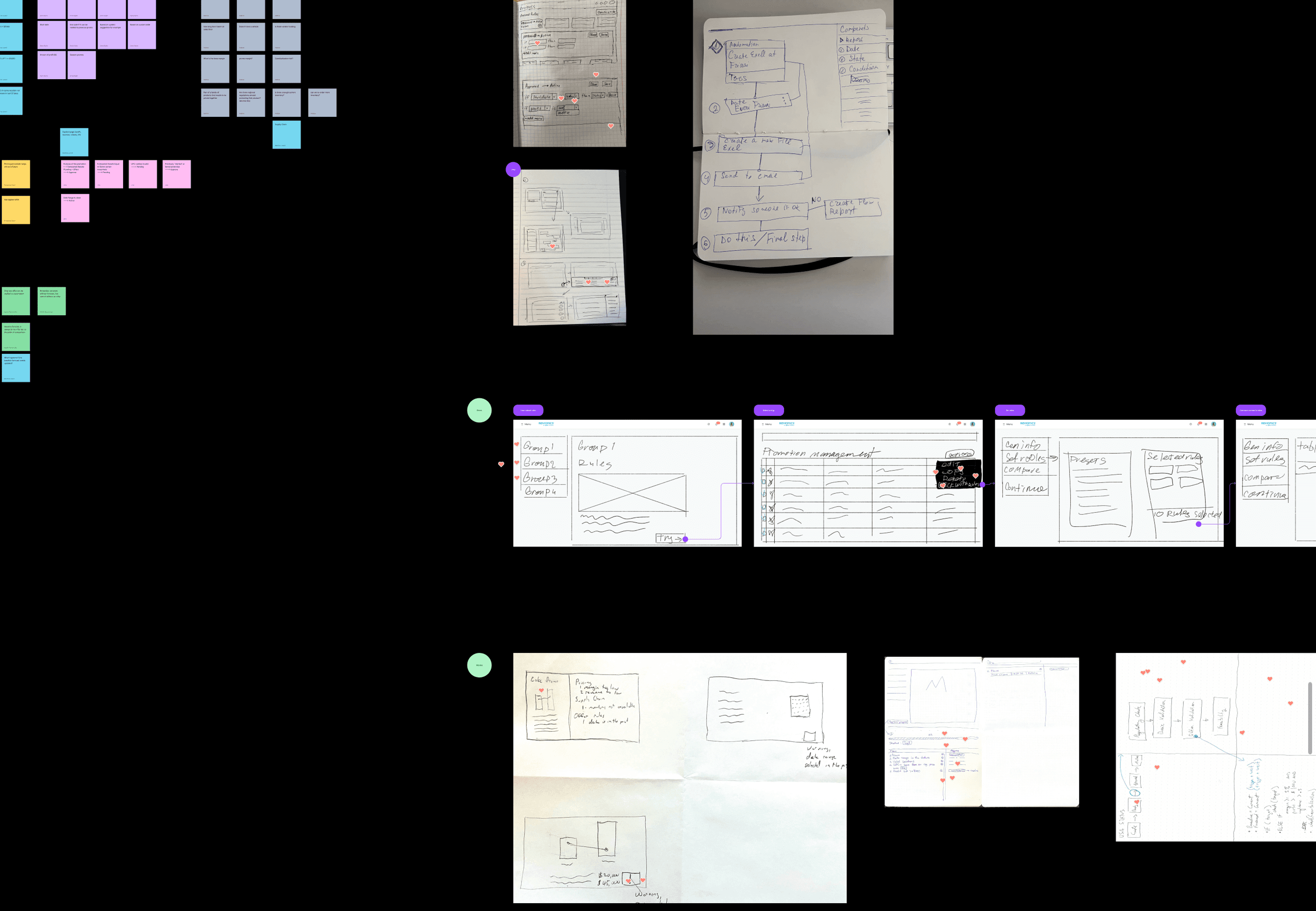
Paper sketches first, then lo-fi wireframes, then a high-fidelity Figma prototype, then real respondents. The first sketch already held the bones of the final product: Start, Create File, Send to Email, Monthly Approval, Final Step.
Three things changed in testing:
The component panel felt detached. Early versions floated it as a sidebar and users kept looking in the wrong place, so I pinned it to a fixed right rail.
Linear flows felt limiting too early. Planners immediately asked "but what if the condition is not met?", so conditional branching went in earlier than planned.
Node configuration overwhelmed people. Early panels exposed every field at once, so I rebuilt it around progressive disclosure, core fields visible by default.
Across eight moderated sessions, completion on the core "build and schedule a report" task moved from about half of participants finishing unaided to nearly all of them after the third iteration.
About half to nearly all completed the core task unaided, after three iterations. (Eight moderated sessions.)
A workflow a non-technical planner can read top to bottom, without being taught how.
The builder shipped in three layers.
Automation Library. Users manage their own, shared and template-based flows in card or list view, each surfacing status, flow count and type at a glance. Creating something new felt like an extension of managing what already existed, not a separate mode.
Workflow Builder. A vertical node canvas where users drag components and stack them into a flow. Logic nodes handle branching. Action nodes do the work: Approve, Notify, Reforecast, Send Messages, Create File. No manual connectors, the spatial layout carries the logic.
Node Configurator. Click any node and a context panel opens. A rule like "If date is Saturday 00:00 to Friday 23:59 AND status is Approved" reads like a business rule, not code.
Gloria's 90-minute Friday recap became an automation that runs at 8am, untouched. A 7 to 9 step weekly process collapsed into a 4 to 6 node flow, configured once and scheduled.
Who | The pain | What changed |
|---|---|---|
Emilia | Reporting delays, Excel exports every week | "Create File → Send Email" runs on schedule |
Nora | Too many approvals, market moves while waiting | Approve node auto-routes status changes |
Gloria | Manual weekly recap, unreliable systems | Scheduled automation fires every Friday at 8am |
Jayden | Cross-team dependencies cause delays | Notify node fires the moment a condition is met |
90 minutes every Friday to a job that runs at 8am, untouched. 7 to 9 steps to 4 to 6 nodes, set up once.

Enterprise users do not need simpler tools. They need trustworthy ones.
The first version of the workflow builder used a purely vertical linear chain. In later iterations I started bringing in conditional branching — the If/Else and Branch nodes that let flows split based on business rules. If I were doing this from scratch today, I'd map the full complexity of enterprise conditional logic earlier. The moment users get comfortable with linear flows, they immediately want branching. That was foreseeable, and I should have planned for it sooner. The configurator went through a similar arc — early versions exposed too much at once. Configuration depth is valuable, but it should be progressive. Show the essentials first. Let the rest reveal itself when it's needed.
The bigger thing I took from this project is about enterprise users in general. They're not less sophisticated than consumer users. They're operating under different constraints. They don't need simpler tools. They need trustworthy ones. Visibility, predictability, and undo-ability matter more than delight effects. Most automation tools assume people want maximum autonomy. In practice, they want control with assistance — a system that does the work but lets them see the logic and own it.
One thing I'm genuinely proud of is the timing. I built this in late 2023, drawing inspiration from macOS Shortcuts and node-based video editors. Not from AI agent frameworks, which weren't really a thing yet. When the agentic AI wave hit in 2024–2025 and "workflow automation" became one of the defining design problems of the era, I'd already shipped a version of it in production. That wasn't luck. It came from looking sideways at adjacent domains and asking what enterprise software could learn from consumer software.