Shopadvizor
Redesigning a consumer review platform for Central European markets.
Consumer / Retail
Cross-Platform UX
Role
Lead Product Designer
Timeline
7 Months
team
Lead Designer + 2 Designers
platform
Web + Mobile
Product context
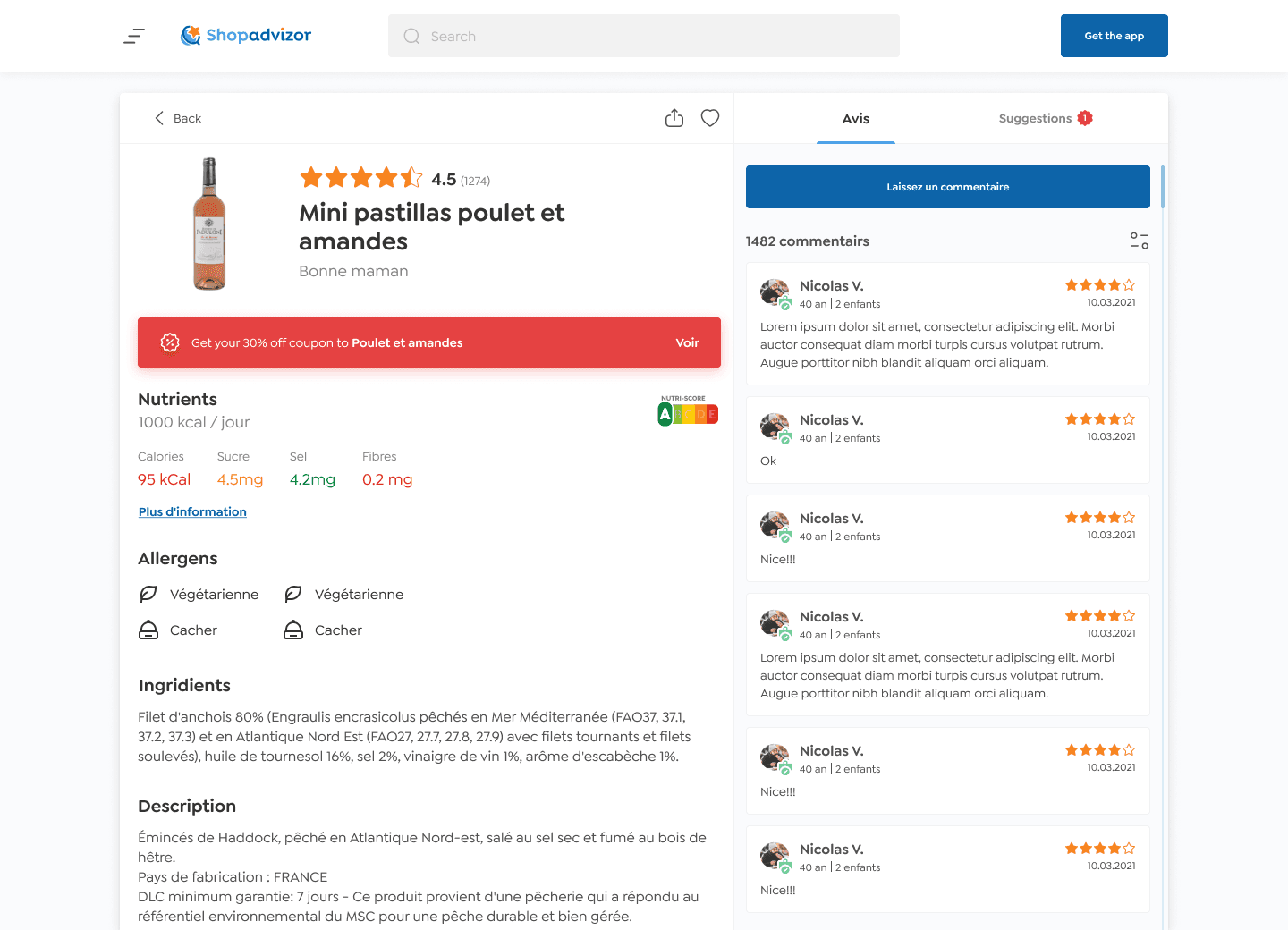
ShopAdvizor is a French consumer review platform built around a simple idea: Tripadvisor, but for products at your supermarket. A user scans a barcode, reads community reviews, checks the Nutri-Score, and decides whether a product is worth buying. By early 2021, the platform had real users and a clear product promise — but the experience was not doing enough to turn passive visitors into an active review community. The interface felt visually dated, product discovery was cluttered, and the most important actions required more effort than they should. The task was to redesign how users discover, evaluate, and review supermarket products across two platforms, from scratch.
My role and constraints
I led the design end-to-end. Two junior designers worked under my direction, while I owned the product logic, interaction decisions, visual direction, and all final design calls. My responsibility was to keep the product coherent across mobile and web while making sure the team moved fast enough to give the client clear progress at every stage.
The main constraint was that we had to work without the things a designer would normally want before a redesign: no dedicated user research, no analytics access, and no existing design system to extend. Every decision came from product audit and first-principles reasoning — because there was no other foundation to build from.
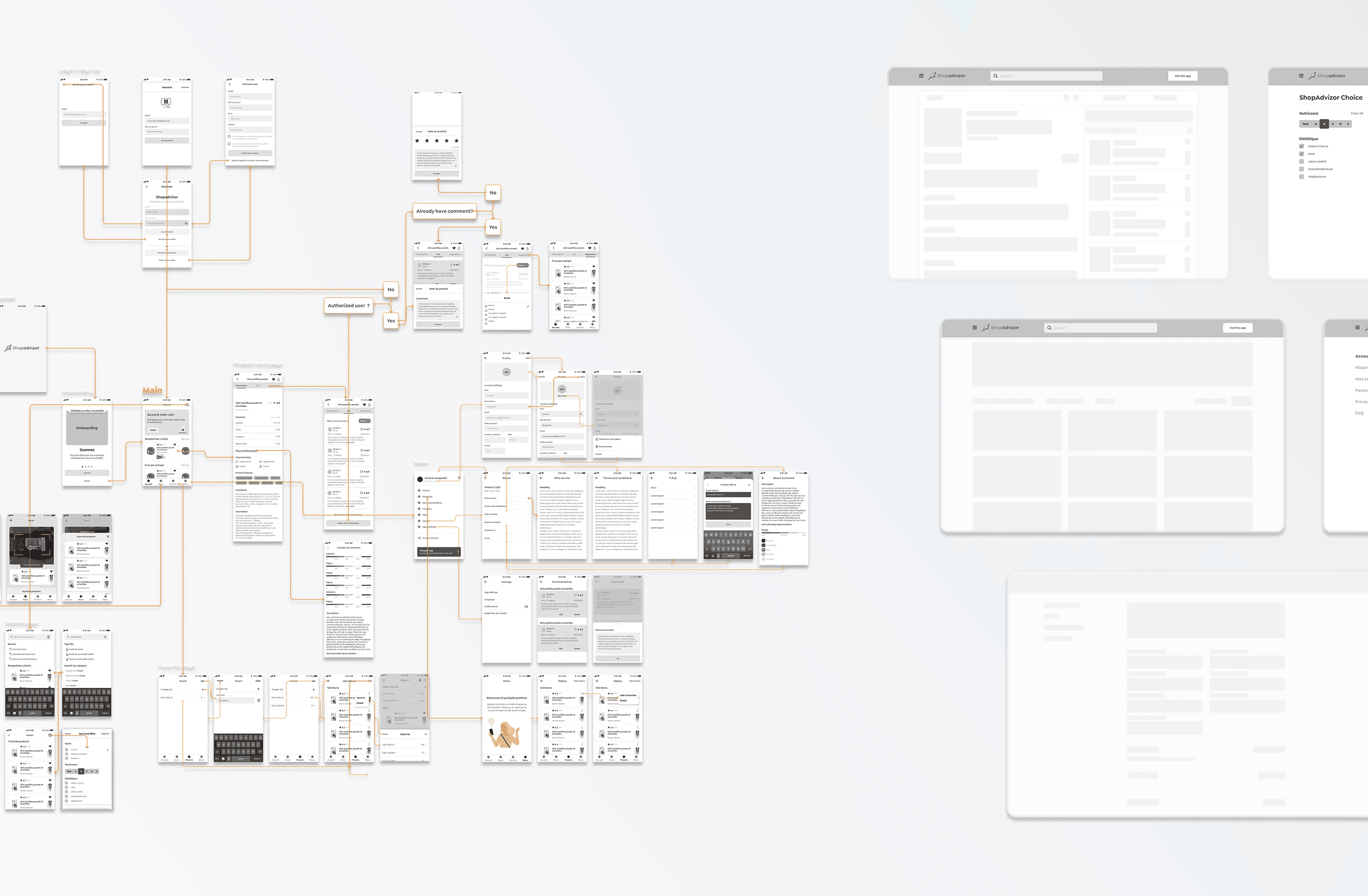
We were also designing both platforms in parallel. Mobile and web could not simply copy each other, but they had to share the same mental model: discovery, evaluation, review, and return. My job was to protect that logic while the interface changed shape across screen sizes.
Decision 1: Reframing the product page around decision speed
The product page became the centre of the redesign because it was where the product either helped a user decide — or failed.
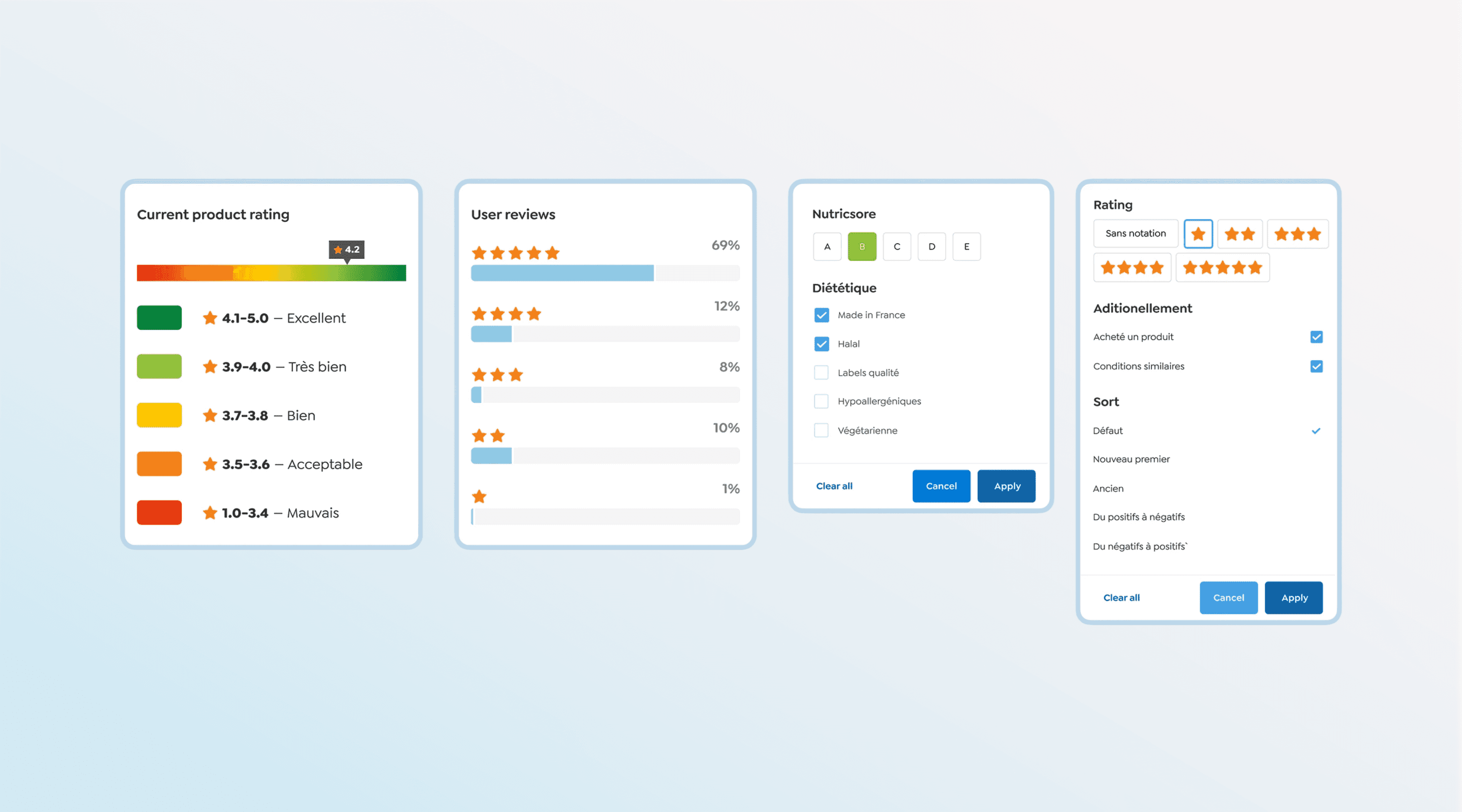
This screen had to carry more information than almost any other part of the product: aggregate rating, Nutri-Score, product details, ingredients, allergens, nutritional breakdown, and user reviews. The old approach tried to surface too much at once. That made the page informative, but not necessarily useful.
I reframed the problem around decision speed. Instead of asking "What does the user need to see?", I asked "What question is the user trying to answer, and how fast?" In this context, the answer was always the same: is this product worth buying?
That question has two layers. There is a two-second answer: rating, Nutri-Score, and immediate quality signals. Then there is a thirty-second answer: reviews, ingredients, allergens, and nutritional detail for users who want more confidence before deciding. I structured the page around that two-stage reading pattern. The top section gives a fast verdict. Deeper information stays available below, but does not compete for attention immediately. Nothing important is hidden — the visual weight simply guides the eye in the right order.
Decision 2: Mobile-first as a product constraint
The decision to design mobile first came from the product's actual usage context, not from convention. The most critical behaviour happened on mobile: scanning a barcode in-store, checking reviews while standing in front of a shelf, deciding whether to put a product in the trolley. That moment is short, distracted, and practical. The interface has to answer quickly.
Starting with mobile forced prioritisation. On a narrow screen, there is nowhere to hide unclear hierarchy. Every element has to earn its place. That pressure helped define what mattered most: product recognition, rating confidence, Nutri-Score visibility, review access, and a clear path to contribute.
Once the mobile logic was strong, the web expanded it. The layout changed. The proportions changed. Some navigation patterns changed. But the underlying UX stayed the same: discovery → evaluation → review. That consistency made the product feel like one system across platforms, not two separate redesigns.
Decision 3: Making the product more human and more buildable
The old interface felt cold and transactional. That was a problem for a product that depended on participation. If users are expected to leave reviews, return to the product, and trust community signals, the experience cannot feel like a dry database.
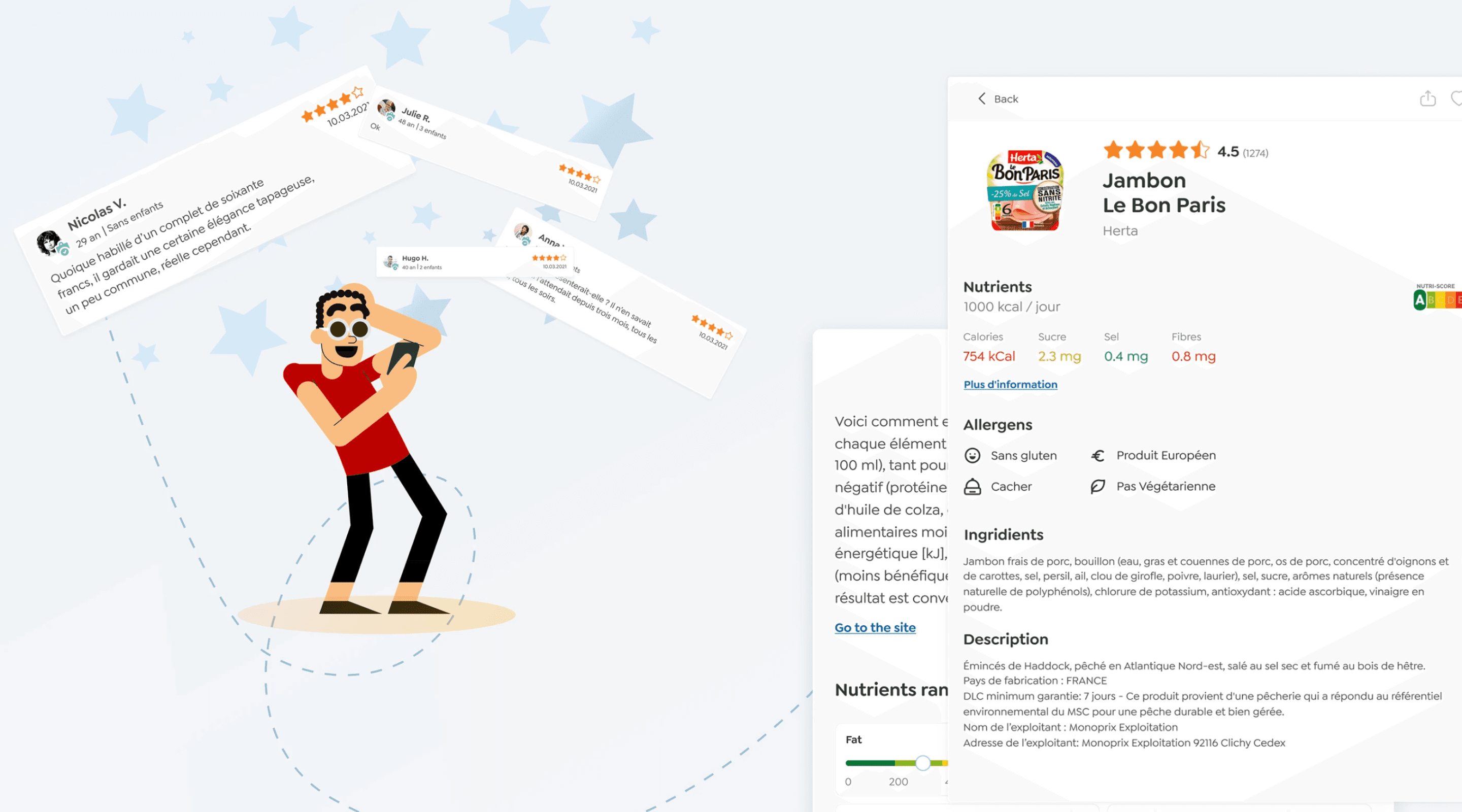
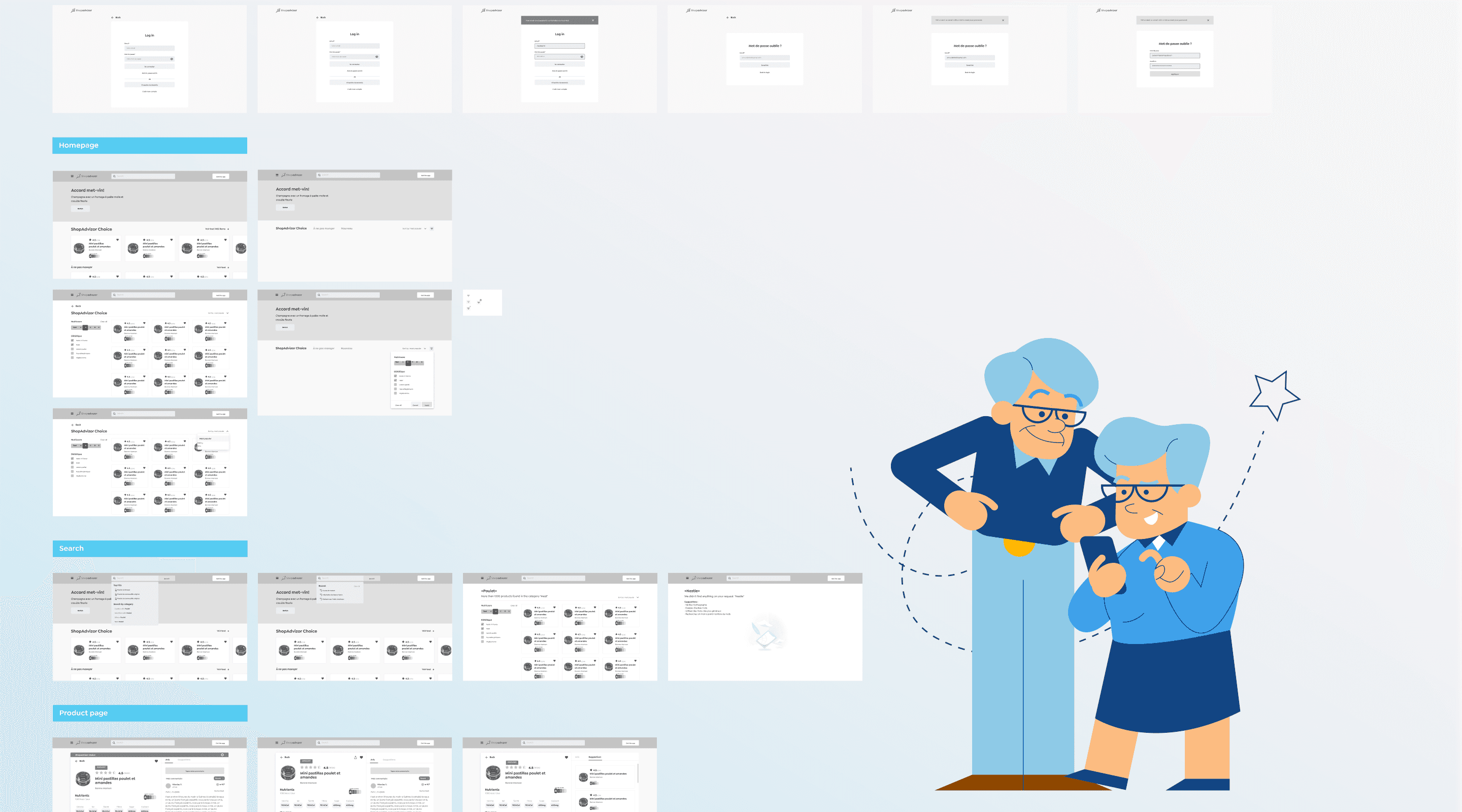
I introduced a custom illustration system to give the product more warmth and personality. Characters, onboarding moments, empty states, seasonal splash screens, and no-result states helped turn friction points into softer product moments. The illustrations were not decoration — they gave the interface a more human tone exactly where the product needed encouragement: first launch, empty history, no comments, low-engagement states.
At the same time, the redesign had to be buildable. I created a complete component library in Storybook alongside the Figma files, documenting states, variants, and interaction logic. We also mocked the backend with realistic product and review data, so the engineering team could work with real-looking interfaces rather than abstract placeholders. Their job was to connect live API calls to a system that already had structure, components, states, and realistic content behaviour.
Outcome and reflection
ShopAdvizor continued to grow after the redesign. The platform is now positioned as a leading French consumer review platform for supermarket products, with 1M+ active users, 20M+ product reviews, and enterprise partnerships with Unilever, P&G, Danone, L'Oréal, PepsiCo, Ferrero, and Mondelez. Its ratings appear across Carrefour print catalogues, e-catalogues, and in-store signage.
These numbers reflect the full team's output over time. My contribution was in the design foundations: the information architecture, the cross-platform UX logic, the mobile-first decision model, the component system, and the visual language that made the experience coherent enough to scale.
The product shipped, and the core design decisions continued to live inside the platform. That is the part I value most — it means the work was practical enough to survive inside a real product, not just presentable in a case study.
If I were doing this project again, I would push harder for at least one round of usability testing on the product page before finalising the structure. The density of information there justified it. At the time, we made the best decisions we could from audit, product logic, and design judgment. But that screen was important enough to deserve direct user validation.